The History of Ancient Egypt: Dynasties, Political Cycles, Religion, and Measurement Systems
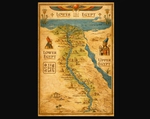
The Egyptian Historiography Map
Ante Egypt: Proto-States, Tribes, and the First Nile Settlements (Prior to circa 3100 BCE)
The Nile as the ‘State-Maker’
The Nile Valley engendered a singular circumstance: predictable agriculture (flood cycles), dense settlement, and facile transport (north-flowing river conjoined with southerly winds). This amalgamation tended to beget regional chieftains, subsequently proto-states, and eventually a unified state.
Proto-States and Cultural Regions
Long antecedent to ‘pharaohs’, Egypt existed as a patchwork of local communities which gradually coalesced into chiefdoms, and thence proto-kingdoms, most notably:
- Upper Egypt (south): displaying earlier and more robust political consolidation, with notable centres such as Hierakonpolis (Nekhen) and Abydos/Thinis.
- Lower Egypt (north/delta): encompassing numerous competing communities within the delta marshlands.
Archaeologically, this pre-state epoch is conventionally delineated through the Predynastic sequence (frequently associated with sites such as Naqada) rather than through written dynastic histories.
Early Towns, Augmenting Complexity, and the Path to Unification (Predynastic → Early Dynastic)
Predynastic Period (Roughly 5000–3000 BCE)
Key Developments:
- Permanent villages expanding into towns
- Craft specialisation (stone vessels, later metalwork), trade networks
- Elite burials commencing to signal ranked society and nascent kingship
Unification (Around circa 3100 BCE, the ‘Two Lands’ become one)
Tradition holds that later Egyptians credited a founding king (oft designated Menes in later traditions), yet archaeological findings strongly underscore Narmer as a pivotal figure in unification.
The Narmer Palette (a celebrated ceremonial object) depicts a ruler associated with both Upper and Lower Egyptian symbolism, frequently interpreted as celebrating unification (or at the very least, dominion over rivals). It is of import to acknowledge the nuance: modern scholars posit that unification was likely a process, rather than a singular battle or isolated day.
Early Dynastic Period (Dynasties 1–2, circa 3000–2686 BCE)
It is herein that ‘pharaonic’ Egypt becomes discernible as a state:
- A royal administration develops (taxation in kind, officials, record-keeping)
- Major royal cemeteries established at Abydos
- Early manifestations of monumental building and state religion
The ‘First Kingdom’ Idea: The Old Kingdom and the Pyramid Age (2686–circa 2150 BCE)
Old Kingdom (Dynasties 3–6) (Oft designated the ‘Pyramid Age’)
Core Features
- Pharaoh existing as a divine-style ruler at the epicentre of cosmic order (ma’at: right order/justice)
- A potent court and provincial administration
- Massive state projects: The Step Pyramid (Djoser, 3rd Dynasty) and the classic pyramids at Giza (4th Dynasty)
Notable Pharaohs (High-Level)
- Djoser (Step Pyramid)
- Sneferu (major pyramid innovations)
- Khufu, Khafre, Menkaure (Giza pyramid complex tradition)
Why the Old Kingdom Declines
Not attributable to one simple cause—but rather a ‘perfect storm’:
- Provincial governors (nomarchs) accrue local power
- Economic/administrative strain over time
- Likely climate/famine stresses, a subject of scholarly debate. This culminates in fragmentation.
Collapse and Recovery Cycles: Intermediate Periods and Middle Kingdom
First Intermediate Period (Circa 2150–2030 BCE)
- Political fragmentation: multiple centres of power
- Cultural life persists, yet the centralised state weakens
Middle Kingdom (Circa 2030–1640 BCE)
A signal reunification and administrative revival:
- The return of strong kingship
- Expansion into Nubia, fortifications, regulated trade routes
- Flourishing of literature (wisdom texts, narratives)
Notable Kings (Selection)
- Mentuhotep II (key figure in reunification at the commencement)
- Senusret III and Amenemhat III are oft associated with robust state capacity and frontier policy
Second Intermediate Period (Circa 1640–1540 BCE): Hyksos Era
Northern Egypt (Delta) falls under the dominion of rulers oft designated Hyksos (of Asiatic origin)
Southern dynasties endure; ultimately, Theban rulers instigate reunification
Protracted Fragmentation and Foreign Dynasties: Third Intermediate → Late Period (1070–332 BCE)
Third Intermediate Period (Circa 1070–713 BCE)
- Power becomes partitioned: pharaohs, high priests (chiefly of Amun), and regional dynasts contend
- Dynasties of Libyan origin and shifting capitals
- Egypt remains culturally Egyptian, yet politically decentralised
Late Period (Circa 664–332 BCE)
Frequently a sequence of revivals and foreign domination:
Native dynasties (e.g., Saite/26th) attempt restoration and classicism; periods of Persian control transpire (Achaemenid rule is reckoned as dynasties in certain chronologies)
‘Last Kingdom’: Macedonian & Ptolemaic Egypt, Then Rome (332–30 BCE)
Macedonian Takeover (Alexander the Great)
Alexander enters Egypt (332 BCE) and is accepted as ruler; this concludes the protracted native pharaonic line as the principal power base.
Ptolemaic Kingdom (305–30 BCE): The Final Dynasty of Ancient Egypt
- Founded by Ptolemy I, one of Alexander’s generals.
- A Greek-speaking dynasty rules from Alexandria, yet pharaonic religious legitimacy endures (temples, priesthoods, traditional iconography), engendering a blended Greco-Egyptian political culture.
Cleopatra VII and the End (30 BCE)
Cleopatra VII is the last active Ptolemaic ruler; following her defeat by Octavian, Egypt becomes a Roman province.
Abridged ‘Period Map’ (To ensure the entire narrative remains anchored)
This periodisation constitutes the standard framework employed in numerous museums/universities: Predynastic → Early Dynastic → Old Kingdom → First Intermediate → Middle Kingdom → Second Intermediate → New Kingdom → Third Intermediate → Late Period → Ptolemaic → Roman.
A Dynasty-by-dynasty Chronology (Dynasty 1 → 31 → Ptolemies) with Key Pharaohs
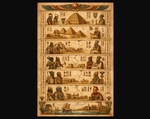
Formation of the Egyptian State
Dynasty 0 (Proto-Dynastic, circa 3200–3000 B.C.E.)
Regional monarchs in Upper Egypt (Abydos, Hierakonpolis); Elite sepulchres evince a burgeoning royal ideology; Early hieroglyphic script appears; Political consolidation accelerating; Oft associated with personages such as the Scorpion King and, perchance, Narmer in the latter phase.
Dynasties 1–2 (Early Dynastic Period, circa 3000–2686 B.C.E.)
Key developments: Political unification of Upper and Lower Egypt; Memphis likely established as the administrative capital; Development of a centralised bureaucracy; Royal tombs at Abydos.
Major Rulers: Narmer (often identified with unification), Aha, Djer, Peribsen (an interesting religious shift towards Seth); Religion: fully polytheistic, local cults integrated into royal theology.
The Old Kingdom – The Pyramid Age
Dynasty 3 (2686–2613 B.C.E.)
- Djoser
- Architect Imhotep
- Step Pyramid at Saqqara (first monumental stone complex)
State ideology: Pharaoh as divine guarantor of Ma’at (cosmic order).
Dynasty 4 (2613–2494 B.C.E.)
- Sneferu
- Khufu
- Khafre
- Menkaure
Great Pyramid era (Giza); Central authority exceedingly strong.
Dynasty 5 (2494–2345 B.C.E.)
- Expansion of sun cult (Ra)
- Solar temples built
- Administrative expansion
Dynasty 6 (2345–2181 B.C.E.)
Pepi II (a considerably lengthy reign). Increasing provincial power; Central authority weakens.
First Intermediate Period (Dynasties 7–10, circa 2181–2055 B.C.E.)
Political fragmentation; Competing regional rulers (Herakleopolis versus Thebes); Economic instability. Yet culture and literature continue.
Middle Kingdom (Dynasties 11–12, circa 2055–1650 B.C.E.)
Dynasty 11
Mentuhotep II reunifies Egypt: A strong revival of kingship
Dynasty 12
- Amenemhat I
- Senusret III
- Amenemhat III
Highly organised administration; Expansion into Nubia; Literature flourishes. Religion remains traditional polytheism, but the Osiris cult becomes more democratised (afterlife no longer royal-only).
Second Intermediate Period (Dynasties 13–17, circa 1650–1550 B.C.E.)
Hyksos rulers dominate the Delta (Dynasty 15) (Introduction of: Horse-drawn chariot, composite bow, new military technology)
Theban rulers in the south eventually expel the Hyksos.
New Kingdom – Imperial Egypt (Dynasties 18–20, circa 1550–1070 B.C.E.)
Dynasty 18, Major Rulers:
- Ahmose I (expels the Hyksos)
- Hatshepsut
- Thutmose III
- Amenhotep III
- Akhenaten
- Tutankhamun
Religious revolution: Akhenaten (Amenhotep IV) promotes the exclusive worship of Aten, closing the temples of Amun and moving the capital to Amarna. Often described as an early monotheistic or monolatrist experiment.
After his demise: Tutankhamun restores traditional polytheism, and the Amun priesthood regains dominance.
Dynasty 19
- Ramesses I
- Seti I
- Ramesses II
- Battle of Kadesh (against Hittites)
Strong monumental propaganda at this period.
Dynasty 20
Ramesses III: Sea Peoples invasions; Economic strain; Worker strikes recorded; End of imperial power.
Third Intermediate Period (Dynasties 21–25, circa 1070–664 B.C.E.)
Fragmented authority. High Priests of Amun powerful; Libyan dynasties (22–23); Nubian (Kushite) Dynasty 25 restores some central authority; Religion remains polytheistic.
Late Period (Dynasties 26–31, 664–332 B.C.E.)
Dynasty 26 (Saite Renaissance)
Cultural revival; Archaism in art; Increased Mediterranean trade.
Persian Rule (Dynasty 27 and 31)
Egypt becomes a satrapy of the Achaemenid Empire; Native revolts occur intermittently.
Macedonian and Ptolemaic Period (332–30 B.C.E.)
Alexander the Great conquers Egypt. Ptolemy I establishes a dynasty; Greek ruling elite + Egyptian priesthood cooperation.
Religion:
Traditional polytheism continues; Syncretism (Serapis cult).
The Last Pharaoh
Cleopatra VII (Ptolemaic dynasty), defeated in 30 B.C.E.; Egypt becomes a Roman province; End of pharaonic political sovereignty.
| Period | Religious Character |
|---|---|
| Early Dynastic–Middle Kingdom | Strong state polytheism |
| New Kingdom (pre-Akhenaten) | Amun-centred polytheism |
| Akhenaten | Aten exclusive worship (quasi-monotheism) |
| Post-Amarna | Return to traditional polytheism |
| Late & Ptolemaic | Polytheism + syncretism |
Structural Pattern of Egyptian History
- Centralised kingdom
- Bureaucratic expansion
- Provincial autonomy growth
- Political fragmentation
- Reunification
This pattern repeats thrice majorly:
- Old Kingdom → 1st Intermediate → Middle Kingdom
- Middle Kingdom → 2nd Intermediate → New Kingdom
- New Kingdom → 3rd Intermediate → Late Period
Measurements in Ancient Egypt
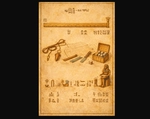
Length Units
The ancient Egyptians possessed a well-developed system of mensuration, universally acknowledged and rigorously standardised. This system was intimately interwoven with the societal fabric and the authority vested in its institutions, thereby mirroring the centralised dominion of a singular potentate who presided over both the governance of the realm and the instruments of its administration.
Herein, ye shall find a table delineating the units of length, together with their approximate equivalents in modern measurements. Further elucidation and sundry intriguing particulars shall be furnished anon — wherefore, I implore thee, tarry awhile!
| Unit | Egyptian / transliteration | In smaller units or relation | Approximate modern value |
|---|---|---|---|
| Digit / Fingerbreadth | ḏbꜥ (sometimes transliterated dbʿ, “digit”) | the basic unit (1) | ~ 1.875 cm (i.e. 0.01875 m) |
| Palm | šsp (shesep) | 4 basics | ~ 7.5 cm (0.075 m) |
| Hand / Handsbreadth | ḏrt (often “hand”) | 5 basics | ~ 9.38 cm (0.0938 m) |
| Fist | ḫfꜥ (or ꜣmm) | 6 basics | ~ 11.25 cm (0.1125 m) |
| Little Shat / Shat nḏs | šꜣt nḏs | 3 palms (12 basics) | ~ 22.5 cm (0.225 m) |
| Great Shat / Half-cubit | šꜣt ꜥꜣ (pḏ nḥs / pḏ nꜣs) | 3.5 palms (or 14 basics) | ~26.2 cm (0.262 m) |
| Foot | ḏsr (often “foot”, or “bent arm”) | 4 palms (16 basics) | ~ 30 cm (0.30 m) |
| Remen | rmn | 5 palms (20 basics) | ~ 37.5 cm (0.375 m) |
| Small / Short Cubit (meh nḏs) | mḥ nḏs | 6 palms (24 basics) | ~ 45 cm (0.45 m) |
| Royal / Sacred Cubit | mḥ (often mḥ nswt for “royal cubit”) | 7 palms (28 basics) | ~ 52.3 – 52.5 cm (0.523–0.525 m) |
| Senu (double royal cubit) | - | 14 palms (56 basics) | ~ 105 cm (1.05 m) |
| Khet (rod) | ḫt | 100 cubits | ~ 52.3 m (i.e. 100 × royal cubit) |
| Cha-ta (“field-length”) | - | ~ 10 khet (~ 1000 cubits) | ~ 520 m (variable by period or region) |
| Iteru | - | 20000 Royal Cubit | ~ 10.5 km (10500 m) |
Units Apearance, And Main Applications
Royal cubit (meh-nswt / mahe)
- Old Kingdom, ~2700 BCE (Step Pyramid of Djoser)
- Architectural measurements evince the employment of the royal cubit (~52.3-52.5 cm), subdivided into 7 palms × 4 basics.
Palms, digits (basic), fingers (“shesep”, “djebâ”, etc.)
- Early Dynastic / Old Kingdom period (~Early 3rd millennium BCE)
- Palms = 4 digits etc., discernible on measuring rods and within architectural schemata. The Palermo Stone doth record the Nile‐flood height as “6 cubits and 1 palm” in the Early Dynastic period.
Knotted cords / ha‘t (land-measuring ropes)
Middle Kingdom / perhaps earlier, yet clearly attested by Middle Kingdom (~2000-1800 BCE)
Utilised for the purpose of land measurement, surveyed lengths, and the like.
Seked (slope measure for pyramid faces)
Old Kingdom, Great Pyramid (~2550 BCE) for Khufu’s pyramid, etc.
The seked of ~5 palms and 2 digits is calculated from modern survey of the pyramid faces.
Measurement of large lengths / khet (100 cubits etc.)
Old Kingdom, used in land measurement and architecture; rods, cords, etc.
Comparisons Between Egyptian vs Sumerian Units
An attempt shall be made to establish a correlation between Sumerian and Egyptian units; however, it is imperative to acknowledge that such an endeavour lacks scientific rigour and should be regarded as a purely speculative exercise.
Cubit sizes are similar
- - Egyptian royal cubit ~ 52.3-52.5 cm; Sumerian Nippur cubit ~ 51.8-52 cm.
- - These dimensions may reflect independent developments arising from human-body proportions, rather than direct borrowing. Proximity and trade may have exerted some influence, yet direct evidence (textual or archaeological) of such borrowing remains scant.
Subdivisions
- - Both systems subdivide the cubit into smaller units (palms, digits, or their equivalents) – thereby exhibiting analogous division structures.
- - The precise structure doth diverge; for instance, the Egyptian system comprises 7 palms × 4 digits = 28 digits, whilst the Sumerian rod encompassed 30 “digits” in certain records. Thus, the structure is akin, albeit not wholly identical.
Use of rods / standard measures
- - Both cultures employed physical standard rods or bars for length measurement, such as the Nippur copper alloy bar and Egyptian cubit rods discovered within tombs (e.g. those of Maya or Kha).
- - There exists no evidence to suggest that the Egyptian rods were replicas of their Mesopotamian counterparts, or vice versa; furthermore, discrepancies persist in material composition, calibration, and contextual usage.
Temporal overlap
- - Both systems are attested to in the 3rd millennium BCE, with Sumerian standards dating back to 2650 BCE and the Egyptian royal cubit to the Old Kingdom (~2700 BCE).
- - Temporal overlap doth not ipso facto establish diffusion; geographical separation and the nature of communication are of paramount import. No unambiguous Mesopotamian text avers “we adopted the Egyptian cubit”, nor the reverse.
Trade / cultural interaction
- - Evidence doth attest to the existence of trade networks across the Near East, potentially facilitating the transmission of measurement concepts. Weighing technology and the like manifest patterns of diffusion. For example, Bronze‐Age weight systems exhibit kindred units across western Eurasia.
- - Nevertheless, precise measurement standards tend towards localisation and may prove resistant to external influence, absent political or economic ascendancy. Furthermore, numerous measurement units evince convergent development (derived from the measurement of human bodies, ropes, rods, et cetera) as opposed to outright borrowing.
It is well-attested that both Egyptians and Sumerians had cubit-scale units with similar lengths, and used physical rods and standard measures as early as the 3rd millennium BCE. The Egyptian royal cubit and the Sumerian cubit are close in value (≈ 52 cm vs ≈ 51.8 cm) which suggests that they may have drawn on similar anthropic bases (arm length, etc.). But there is no conclusive evidence that one borrowed from the other in terms of that specific standard. For other units (area, volume, weights), there is more evidence of independent development but also of later standardisation that may have been influenced by broader Near Eastern practices. In some cases, measurement systems show diffusion of ideas (e.g. use of weights, balance scales, standardized merchandise, etc.), but precise unit equivalences and calibrations are more likely to be local or adapted rather than copied wholesale.